Gamification and Microlearning: 5 Steps To Deliver Top-notch eLearning Experience
Discover how gamification and microlearning work together to build engaging, effective eLearning experiences that boost retention and results.
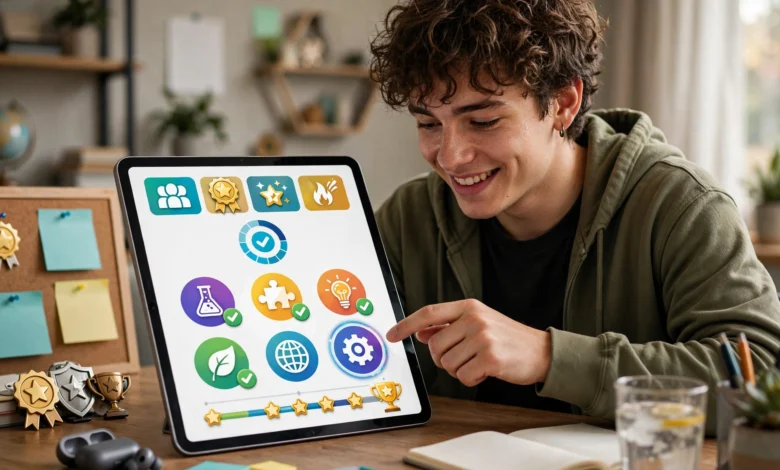
Corporate training has changed. Employees don’t sit through hour-long lectures anymore, and honestly, they never learned much from them anyway. What works now is gamification and microlearning, two strategies that, on their own, already improve how people learn. Put them together, and you get something better than either one alone.
If you’ve researched microlearning or gamification separately, you already know the basics. Microlearning breaks training into short, focused bursts of content. Gamification borrows the psychology of games, points, badges, levels, and friendly competition, to make that content stick. The real value shows up when the two are combined with intention, not just bolted together because it sounds trendy.
This article walks through five practical steps for building a gamified microlearning strategy that actually holds up in the real world. We’ll cover how to structure content, which game mechanics genuinely help (and which ones are just noise), how to measure whether it’s working, and where most L&D teams get tripped up. By the end, you should have a clear, repeatable framework for delivering eLearning experiences that employees actually want to finish, not just tolerate.
Whether you’re building your first microlearning course or trying to fix one that isn’t landing, these steps apply.
Why Gamification and Microlearning Work So Well Together
Before getting into the steps, it helps to understand why this pairing works rather than just accepting that it does.
Microlearning exists because attention spans at work are short and getting shorter. Employees are juggling meetings, messages, and deadlines, and few of them have the bandwidth to sit through a 45-minute course. Breaking content into 3-to-7-minute modules, each focused on a single learning objective, respects that reality. It also aligns with how memory actually works. The Ebbinghaus Forgetting Curve shows that people forget roughly half of new information within an hour if it isn’t reinforced, which is exactly why short, spaced-out lessons outperform long ones for retention.
Gamification, meanwhile, taps into motivation. Points, badges, leaderboards, and progress bars aren’t just decoration, they trigger the same reward pathways that make games genuinely fun to play. When applied to training, that translates into learners who show up voluntarily, complete modules they’d otherwise skip, and retain more of what they learned because they were paying attention in the first place.
Put the two together, and you get bite-sized lessons that people actually want to finish. That combination is why so many corporate learning teams are shifting their eLearning design toward this model instead of traditional, monolithic courses.
Step 1: Define Clear, Single-Focus Learning Objectives
The foundation of any good microlearning strategy is a tightly scoped objective. Before touching a game mechanic or writing a line of content, get specific about what a single module is supposed to accomplish.


A common mistake is trying to cram too much into one microlearning nugget. If a module tries to teach three separate skills, it stops being “micro” and starts feeling like a shrunk-down version of a long course, which defeats the purpose entirely.
How to scope objectives properly
- Write one objective per module. If you can’t summarize what the learner will be able to do in a single sentence, the scope is too broad.
- Tie each objective to a real performance need. Ask what the employee should be able to do differently after finishing the module, not just what they should “know.”
- Sequence objectives into a learning path. Individual modules should build on each other so learners see a logical progression, which also sets up gamified elements like levels and unlocks later on.
- Keep each module under 7 minutes. Research on workplace learning habits consistently points to short, digestible sessions as the format employees are most likely to complete without abandoning.
Getting this step right matters more than people expect. Every game mechanic you layer on top of a poorly scoped module is just a distraction from the fact that the content itself doesn’t work. Objectives come first, mechanics come second.
Step 2: Choose Game Mechanics That Match the Content, Not the Trend
This is where a lot of gamified microlearning initiatives go sideways. Teams add leaderboards, badges, and points because competitors are doing it, without asking whether those mechanics fit the training content or the audience.
Not every mechanic works for every situation. A leaderboard might energize a sales team that thrives on competition, but the same leaderboard could demotivate a compliance training audience who just wants to get through the material without being publicly ranked against peers.
Common gamification elements and when to use them
- Points and scores work well for knowledge checks and quizzes where learners want quick feedback on how they’re doing.
- Badges and achievements are useful for marking milestones in a longer learning path, especially when the path spans multiple weeks or departments.
- Progress bars help learners visualize how close they are to completing a module or path, which reduces drop-off in longer sequences.
- Leaderboards suit competitive, high-energy environments like sales or customer support, but should usually be optional or team-based to avoid discouraging slower learners.
- Levels and unlocks work well when content genuinely builds in complexity, giving learners a reason to keep progressing rather than stopping halfway.
- Challenges and scenario-based tasks are strong for skills practice, since they mimic real decision-making instead of just testing recall.
The goal isn’t to use every mechanic available. Industry guidance on microlearning gamification generally recommends limiting a module to a handful of well-chosen mechanics rather than layering in every option at once. A microlearning gamification module with too many competing elements starts to feel cluttered, and learners spend more energy figuring out the game than absorbing the content.
Step 3: Design for Spaced Repetition and Real-World Application
Gamification and microlearning deliver their biggest wins when the content is spaced out over time rather than delivered all at once. Spaced repetition, revisiting key concepts at increasing intervals, is one of the most well-supported techniques in learning science, and it pairs naturally with short modules.
Instead of releasing an entire course on day one, stagger delivery. Send a module, let learners apply it, then follow up a few days later with a related nugget or a gamified quiz that reinforces the same concept from a different angle.
Practical ways to build in spacing and application
- Release modules on a schedule, not all at once, so learners revisit topics before they fully forget them.
- Follow up with gamified retrieval practice, such as a quick quiz or flashcard-style challenge, a few days after the initial module.
- Add scenario-based challenges that ask learners to apply a concept to a realistic situation rather than just recalling a fact.
- Use performance support nuggets after formal training ends, so employees can revisit specific skills exactly when they need them on the job, not just during a scheduled course.
- Track which concepts learners struggle with and resurface those specific modules more frequently, rather than repeating everything equally.
This step is where a lot of the “dynamite combination” that industry writers describe actually plays out. Learning paths built from multiple short nuggets, layered with levels, challenges, awards, and leaderboards, are commonly cited as one of the strongest applications of this pairing. That structure only works, though, if the spacing and sequencing behind it are deliberate rather than random.
Step 4: Build a Feedback Loop Learners Can See
Feedback is the connective tissue between microlearning and gamification. Short modules only work if learners know, quickly and clearly, how they’re doing. Vague or delayed feedback undermines both the learning and the motivational effect of game mechanics.
Good eLearning feedback loops give learners a sense of momentum. They should be able to see progress accumulate, understand exactly where they went wrong on a quiz, and know what to do next.
Elements of an effective feedback loop
- Immediate scoring after quizzes or challenges, so learners connect their answer directly to the result instead of waiting for a delayed report.
- Clear explanations for wrong answers, not just a red X, so the module doubles as a teaching moment rather than a test.
- Visible progress tracking across the whole learning path, showing completed modules, upcoming ones, and how close the learner is to a milestone.
- Personalized recommendations for which module to tackle next, based on performance rather than a fixed, one-size-fits-all sequence.
- Manager or peer visibility where appropriate, since social accountability can reinforce motivation, though this should be handled carefully to avoid embarrassing slower learners.
A learning management system that supports this kind of tracking is worth the investment. Most industry resources point to the learning management system as the backbone of any gamified microlearning rollout, since it’s what actually deploys the content, tracks progress, and administers rewards behind the scenes. Without that infrastructure, even a well-designed course can feel disconnected, since learners have no easy way to see how their effort adds up.
Step 5: Measure Outcomes and Iterate
The last step is the one teams skip most often: actually checking whether the gamification and microlearning strategy is working, and adjusting based on what the data shows.
It’s tempting to treat launch as the finish line. But a course that looked great in planning meetings can still underperform once real employees interact with it. Completion rates, quiz scores, and behavior change on the job all tell a more honest story than assumptions made during design.
Metrics worth tracking
- Completion rates per module, which reveal where learners are dropping off and whether specific content needs to be shortened or reworked.
- Quiz and challenge performance, showing whether the material is actually landing or just being clicked through.
- Time spent per module, which can flag content that’s either too long or confusingly structured.
- Engagement with optional gamified elements, like whether learners are checking leaderboards or chasing badges, which indicates whether the mechanics are motivating or ignored.
- On-the-job performance change, the ultimate measure of whether training translated into actual behavior, gathered through manager feedback or performance metrics tied to the training topic.
Some research backs up just how much is at stake here. Bite-sized learning approaches have been shown to improve effectiveness by measurable margins, and one frequently cited figure puts that improvement at 17% compared to traditional formats. Numbers like this are a good benchmark, but your own data, pulled from your own learners, will always matter more than industry averages. Use it to trim weak modules, adjust game mechanics that aren’t landing, and double down on what’s clearly working.
Common Pitfalls to Avoid
Even well-intentioned gamified microlearning programs run into predictable problems. A few worth watching for:
- Overloading modules with mechanics. More badges and points don’t automatically mean more engagement. Restraint usually works better than excess.
- Ignoring the content itself. Gamification can’t rescue a module built around a vague or overly broad objective. Fix the content first.
- Treating gamification as decoration. Points and badges should reinforce learning goals, not just sit on top of the interface for visual appeal.
- Skipping the measurement step. Without tracking outcomes, teams have no way to know whether the investment in gamification is paying off.
- Forgetting different learner motivations. Competitive mechanics like leaderboards can backfire for audiences who prefer mastery-based or self-paced progress over public comparison.
Avoiding these mistakes is often more valuable than adding new features. A simpler course that respects learner attention and gives honest feedback will usually outperform a flashy one built on assumptions.
Conclusion
Gamification and microlearning aren’t just buzzwords borrowed from the consumer tech world, they’re a practical response to how people actually learn and stay motivated at work. Getting the combination right starts with tightly scoped learning objectives, followed by game mechanics chosen for fit rather than trend, spaced repetition that reinforces content over time, a feedback loop learners can actually see, and consistent measurement that drives ongoing improvement. Skip any one of these steps and the strategy tends to feel gimmicky rather than genuinely useful. Get all five right, and you end up with training that employees complete willingly, remember longer, and apply on the job, which is really the whole point of building an eLearning program in the first place.