10 Innovative Classroom Practices That Are Transforming Modern Education
Innovative classroom practices are reshaping how students learn. See the strategies teachers are using to boost engagement in 2026.
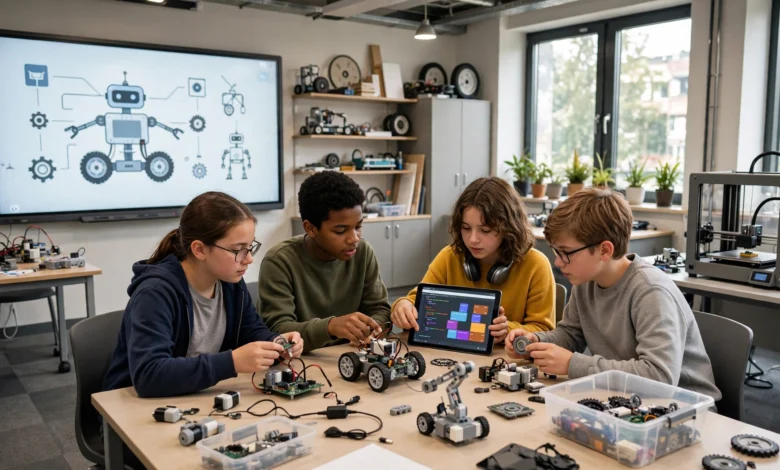
Walk into most schools today and you’ll notice something different from ten years ago. The rows of desks facing a chalkboard are giving way to clusters of students working on laptops, building projects together, or moving between stations at their own pace. Innovative classroom practices are no longer a novelty reserved for tech-forward private schools. They’ve become a baseline expectation for teachers who want their students to actually retain what they learn, rather than just memorize it for a test.
So what counts as innovative in 2026? It’s less about flashy gadgets and more about a shift in mindset: from teacher as the sole source of information to teacher as a guide who helps students think, question, and apply what they know. This shift is being driven by a mix of forces, better classroom technology, growing awareness of how learning science actually works, and a recognition that students who feel disconnected from the material rarely succeed no matter how good the lesson plan looks on paper.
In this article, we’ll walk through the most effective innovative teaching methods being used in classrooms right now, why they work, and how teachers, coordinators, and school leaders can start applying them. Whether you’re teaching first graders or high school seniors, there’s something here you can put into practice this week.
What Does “Innovative Teaching” Actually Mean?
Before diving into specific strategies, it helps to define the term. Innovative teaching is a student-centered approach to education that emphasizes active participation, critical thinking, collaboration, and the thoughtful use of tools and strategies that make learning more engaging and personalized.
It’s worth being clear about one thing: innovation in the classroom doesn’t automatically mean expensive technology or the latest app. Some of the most effective innovative classroom practices cost nothing beyond a bit of planning time. What matters is the underlying principle, moving away from passive listening and toward active, curiosity-driven learning.
A few markers of an innovative classroom:
- Students spend more time doing than listening
- Feedback is frequent, not just at test time
- Lessons connect to real problems students actually care about
- Technology is used to support learning goals, not just for its own sake
- Every student has a way to participate, regardless of learning style or pace
1. Project-Based Learning (PBL)
Project-based learning asks students to investigate and respond to a real, complex question or challenge over an extended period, rather than absorbing information in isolated chunks. Instead of reading about ecosystems and taking a quiz, students might design a plan to reduce waste in their school cafeteria and present it to administrators.
Why it works:
- Builds research, collaboration, and presentation skills that transfer beyond the classroom
- Gives students ownership over their learning, which tends to increase motivation
- Naturally integrates multiple subjects (science, writing, math) into one project
The challenge is time. PBL takes longer to plan than a standard lesson, and teachers need clear rubrics to keep projects from drifting off track.

2. AI-Assisted Teaching and Personalized Learning
Artificial intelligence has moved from a talking point to a practical classroom tool. AI-assisted teaching now covers everything from automated grading and lesson planning to adaptive practice platforms that adjust in real time based on how a student is performing.
According to a 2026 outlook from eSchool News, schools are moving past using AI purely as a time-saver and starting to use it as a genuine driver of better teaching and learning, with tools that sharpen instructional practice and strengthen coaching conversations. That’s a meaningful shift: AI isn’t just cutting down grading time, it’s actively shaping how teachers coach and how students practice.
Common applications:
- Adaptive learning platforms that adjust difficulty based on a student’s answers
- AI tools that draft differentiated worksheets for students at different levels
- Chatbot tutors that give students a low-pressure space to ask questions they might hesitate to ask in front of classmates
The caveat teachers consistently raise: AI should support judgment, not replace it. A tool that doesn’t clearly improve learning or reduce teacher workload isn’t worth adopting just because it’s new.
3. Blended and Hybrid Learning Models
Blended learning combines in-person instruction with online, self-paced digital learning. It became common out of necessity during the pandemic and has since become one of the most widely adopted innovative classroom practices in schools worldwide.
A typical blended approach:
- Students learn a new concept through a short video or online module at home
- Class time is reserved for practice, discussion, and problem-solving with the teacher present
- Teachers use data from the online platform to see who’s struggling before class even starts
This model works because it frees up class time for the part students actually need help with: applying the concept, not just hearing about it.
4. The Flipped Classroom
Closely related to blended learning, the flipped classroom flips the traditional order of homework and lecture. Students watch instructional content or read material at home, then use class time for the harder work: problem-solving, discussion, and application, with the teacher available to help in real time.
Benefits students report:
- They can pause and rewind video lessons instead of missing something said once in class
- They get direct help exactly when they’re stuck, rather than working through confusion alone at home
- It builds independence, since students take responsibility for their first exposure to new material
A more advanced version, sometimes called flipped mastery, requires students to demonstrate they’ve understood a concept before moving to the next one, which helps prevent learning gaps from compounding over a semester.
5. Universal Design for Learning (UDL)
Universal Design for Learning is a framework built on a simple idea: design lessons from the start to work for the widest range of learners, rather than retrofitting accommodations after the fact. It’s rooted in research on how people actually learn, and it benefits far more than just students with diagnosed learning differences.
UDL rests on three principles:
- Multiple means of engagement – giving students different ways to stay motivated and interested
- Multiple means of representation – presenting information through text, audio, visuals, or hands-on demonstration
- Multiple means of action and expression – letting students show what they know through writing, speaking, building, or presenting
Teachers who adopt UDL often find it reduces the number of individual accommodations they need to manage, because the lesson is already built to be flexible.
6. Gamification and Game-Based Learning
Gamification applies game mechanics, points, levels, badges, leaderboards, to non-game learning activities. It’s not about turning every lesson into Fortnite; it’s about borrowing the psychological hooks that make games engaging and applying them to classroom tasks.
Practical examples:
- Turning a vocabulary unit into a point-based challenge with team leaderboards
- Using digital platforms like Kahoot or Blooket for review sessions
- Structuring a semester-long project as a series of “levels” students unlock by mastering skills
Gamification works especially well for repetitive practice, like math drills or spelling, where motivation typically drops off. The risk is overdoing it: if every activity becomes a competition, students can start chasing points instead of understanding.
7. Micro-Learning and Bite-Sized Content
Attention spans are shorter, and lesson design has adapted. Micro-learning breaks content into short, focused segments, typically five to ten minutes, that target one specific skill or concept rather than covering broad ground in a single sitting.
This approach works particularly well for:
- Reviewing material before a test in short daily bursts rather than one long cram session
- Teaching discrete skills (like a single grammar rule or math operation) without overwhelming students with context they don’t need yet
- Supporting students who need repeated, spaced exposure to a concept to retain it
The research behind spaced repetition and shorter learning intervals is well established, and it’s part of why platforms built around micro-learning have grown quickly in schools.
8. Collaborative and Peer-to-Peer Learning
Collaborative learning structures class time so students learn from and teach each other, not just the teacher. This can look like structured group projects, peer tutoring, or simple discussion protocols where students explain their reasoning to a partner before the class discusses it as a whole.
Why teachers keep coming back to it:
- Explaining a concept to someone else is one of the fastest ways to solidify your own understanding
- It surfaces misconceptions the teacher might not catch through a lecture alone
- It builds communication and teamwork skills that matter well beyond school
A well-known research synthesis published in the Proceedings of the National Academy of Sciences found that active learning approaches, including collaborative structures, consistently outperform traditional lecture-based instruction in STEM courses. You can read more about that research through Cornell University’s Active Learning Initiative, which draws on this body of evidence.
9. Social-Emotional Learning (SEL) Integration
Social-emotional learning has moved from a nice-to-have to a core part of how schools think about student success. Rather than treating academics and emotional wellbeing as separate tracks, innovative classrooms weave SEL directly into daily instruction: teaching students to name their emotions, manage conflict, and build empathy alongside their academic content.
A 2026 review of education trends noted that the most effective schools now integrate technology, SEL, and student data as interconnected systems, rather than separate initiatives. That integration matters because a student who’s anxious or disengaged emotionally isn’t going to absorb a lesson no matter how well it’s designed.
Simple ways teachers build this in:
- Starting class with a short check-in on how students are feeling
- Teaching conflict-resolution language explicitly, rather than assuming students will pick it up naturally
- Building in regular opportunities for reflection, not just performance
10. Data-Driven, Responsive Teaching
The last of these innovative classroom practices is less about a single technique and more about a habit: using ongoing data, quizzes, exit tickets, digital platform results, to adjust instruction in near real time, instead of waiting for a unit test to find out who’s behind.
This looks like:
- Reviewing a quick formative assessment at the end of class to decide what to reteach tomorrow
- Grouping students flexibly based on current understanding rather than fixed ability tracks
- Using classroom data to catch a struggling student in week two of a unit, not week eight
Responsive teaching also strengthens something harder to quantify: relationships. When students see that a teacher notices and responds to how they’re actually doing, not just their test scores, they tend to stay more engaged.
How to Start Implementing These Practices
You don’t need to adopt all ten at once. A more realistic path looks like this:
- Pick one practice that addresses your biggest current challenge. If engagement is low, start with gamification or project-based learning. If students are falling behind at different rates, start with blended learning or UDL.
- Pilot it with one unit or one class, not your entire course load, so you can adjust before scaling up.
- Collect quick feedback from students on what’s working, not just what you assume is working.
- Loop in colleagues. Isolation is one of the biggest reasons innovative practices stall out; sharing resources and troubleshooting with other teachers makes it far more sustainable.
- Give it a full grading period before judging results. Most of these approaches take a few weeks for students to adjust to before their real impact shows up.
Common Pitfalls to Avoid
- Skipping feedback loops. Innovative methods only work if you’re checking for understanding regularly. Formative assessment isn’t optional here.
- Trying to do it all alone. Professional development and peer collaboration make a measurable difference in how well new practices stick.
- Chasing technology for its own sake. If a tool doesn’t clearly support a learning goal, it’s not worth the classroom time it takes to introduce.
- Underestimating planning time. Practices like PBL and flipped classrooms need more upfront preparation than a standard lecture, so build that time in rather than trying to wing it.
Conclusion
Innovative classroom practices, from project-based learning and AI-assisted instruction to blended models, gamification, and social-emotional integration, share a common thread: they put students in an active role instead of a passive one, and they use feedback and data to keep instruction responsive rather than static. None of these approaches require an entire school overhaul overnight. Teachers who pick one or two practices that address a real classroom challenge, pilot them carefully, and lean on colleagues for support tend to see the clearest results. As classrooms continue to blend technology with human connection, the schools that adapt thoughtfully, rather than chasing every new tool, will be the ones that genuinely improve how students learn.