How Artificial Intelligence is Transforming Today’s Classrooms
Discover how artificial intelligence is revolutionizing education. Learn about AI tools, personalized learning, and the future of classroom technology in 2026.

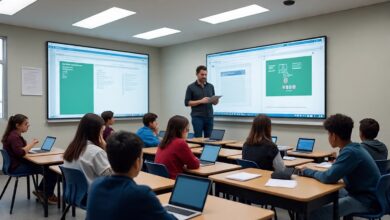
The classroom of 2026 looks different than it did just a few years ago. Walk into a modern school, and you might see students working at their own pace on tablets while a teacher moves between groups, providing targeted support. Behind the scenes, artificial intelligence is quietly orchestrating this personalized approach to education, analyzing how each student learns and adapting in real time.
This isn’t science fiction. According to recent data, 60% of teachers in the United States are now using AI tools in their classrooms, and 92% of university students report using some form of AI in their studies. The AI in education market has ballooned to $7.71 billion in 2025, and experts project it will reach $32.27 billion by 2030. These numbers tell a compelling story about a fundamental shift happening in education right now.
But what does this transformation actually mean for students, teachers, and the future of learning? This article explores how AI-powered technology is reshaping everything from lesson planning to student assessment, the challenges we’re facing, and where education is headed in an increasingly digital world. Whether you’re an educator wondering how to integrate these tools or a parent curious about what your child is experiencing, understanding this shift matters now more than ever.
The Current State of AI in Education
Artificial intelligence in classrooms has moved from experimental to essential faster than anyone predicted. The technology that once seemed futuristic is now part of daily instruction across the country.
The adoption numbers paint a clear picture. Research shows that 83% of K-12 teachers now use generative AI tools for either personal or school-related activities. Among high school teachers, that number jumps to 66%, and early-career teachers are leading the charge at 69%. Students aren’t far behind. Teen use of ChatGPT for schoolwork doubled from 13% in 2023 to 26% in 2024, with the highest usage among 11th and 12th graders at 31%.
What’s driving this rapid uptake? Teachers report saving an average of 5.9 hours per week by using AI tools for routine tasks. That’s nearly a full working day back each week. The most common applications include research and content gathering (44%), creating lesson plans (38%), summarizing information (38%), and generating classroom materials (37%). These aren’t just convenience features. They represent fundamental changes in how educators approach their work.
The technology landscape includes everything from simple chatbots to sophisticated adaptive learning platforms. Tools like ChatGPT, Google Gemini, and Claude help with planning and communication. Specialized platforms like DreamBox Learning and Khan Academy’s Khanmigo provide personalized learning experiences that adjust to each student’s pace and understanding. Meanwhile, systems like Gradescope automate grading, and platforms like SchoolAI offer comprehensive solutions that combine lesson planning with student assessment.
North America leads the global market, accounting for 36% of the worldwide AI in education sector. But this is a truly international phenomenon, with 64% of Chinese higher education institutions planning to implement AI labs and European countries developing ethical guidelines for AI use in teaching and learning.
How AI Creates Personalized Learning Experiences
The promise of education has always been meeting students where they are. AI-powered personalized learning is finally making that ideal possible at scale.


Traditional classrooms operate on a one-size-fits-all model by necessity. A teacher with 25 or 30 students can’t create 30 different lesson plans or provide immediate, individualized feedback to everyone. Artificial intelligence changes this equation entirely.
Adaptive learning platforms analyze how students interact with material in real time. When a student struggles with a math concept, the system recognizes the pattern and adjusts. It might break the problem into smaller steps, present the information visually rather than through text, or provide additional practice problems targeting that specific skill gap. When a student masters content quickly, the platform moves them forward without making them wait for the rest of the class.
Take DreamBox Learning as an example. This platform uses continuous formative assessments to understand not just what a student knows, but how they think. It tracks which problem-solving strategies work for each learner and presents future challenges in ways that build on those natural approaches. The result? Students report higher engagement because the work feels appropriately challenging rather than frustratingly difficult or boringly easy.
The personalization goes deeper than pacing. AI systems can identify specific misconceptions rather than just noting wrong answers. If a student consistently struggles with a particular type of fraction problem, the system pinpoints whether the issue is understanding equivalence, comparing sizes, or performing operations. This diagnostic precision lets teachers intervene with exactly the right support.
For students with learning differences, these capabilities are transformative. A student with dyslexia can have text automatically converted to speech. A student who processes information more slowly can work through material at their own speed without feeling rushed. English language learners can access translations and explanations in their native language while building proficiency.
The data backs up these benefits. Students using AI-powered adaptive learning have shown score improvements of up to 54% on standardized tests. A study at Macquarie University found that students using AI chatbots for support improved examination results by up to 10%. These aren’t marginal gains. They represent meaningful improvements in learning outcomes.
AI-Powered Tools Revolutionizing Teaching
Teachers face an impossible balancing act. They need to plan engaging lessons, grade assignments, track student progress, communicate with parents, handle administrative paperwork, and actually teach. Artificial intelligence is shifting what’s possible by taking over the mechanical parts of the job.
Lesson Planning and Content Creation
Creating lesson plans that meet curriculum standards, engage diverse learners, and incorporate multiple teaching strategies takes hours. Teachers using AI tools like ChatGPT or specialized educational platforms can generate comprehensive lesson plans in minutes. These aren’t just generic templates. Modern AI systems can account for grade level, subject matter, learning objectives, and even the specific needs of students in the class.
A teacher might prompt the system: “Create a lesson plan for 8th grade students learning about photosynthesis, including hands-on activities for kinesthetic learners and visual diagrams for visual learners.” The AI generates a structured plan with activities, discussion questions, and assessment ideas. The teacher then refines and personalizes it based on their knowledge of the students.
Content creation extends beyond planning. AI platforms generate worksheets, practice problems, quiz questions, and reading comprehension exercises. Tools like Genially and Canva’s AI features help teachers create visually engaging presentations and interactive materials without spending hours on design work.
Automated Grading and Feedback
Grading is one of teaching’s most time-consuming tasks. AI-powered automated grading systems handle multiple-choice tests instantly, but modern systems go further. They can grade short answer responses, provide detailed feedback on essays, and even assess mathematical reasoning by analyzing the steps students show in problem-solving.
Gradescope, for example, groups similar answers together, making it faster to grade consistently across a large class. The system learns from the teacher’s initial grading and can apply the same rubric to similar responses. For formative assessments, AI tools provide immediate feedback to students, so they don’t have to wait days to learn what they got wrong.
This immediate feedback loop matters for learning. Research shows that students benefit most from feedback when it comes quickly after the assignment. AI systems make this possible for every student, every day.
Classroom Management and Student Monitoring
AI-powered classroom management tools help teachers track student engagement in real time. Platforms like Engageli monitor speaking time, participation in chat, and even sentiment analysis to gauge how students are responding to material. When the system detects disengagement or confusion across multiple students, it can prompt the teacher to pause and clarify.
For online and hybrid learning, these capabilities are particularly valuable. Teachers can’t read body language through a screen the same way they can in person. AI analytics fill that gap, providing insights that help teachers adjust their approach mid-lesson.
Administrative Task Automation
Beyond instruction, teachers spend hours on administrative work. AI systems automate attendance tracking, schedule parent-teacher conferences, generate progress reports, and handle routine email responses. Some platforms can even draft personalized emails to parents about student progress, which teachers can review and send.
This automation doesn’t replace the human connection between teachers and families. Instead, it frees up time for more meaningful interactions. A teacher who saves two hours a week on paperwork has two more hours for one-on-one conversations with struggling students or planning engaging activities.
Intelligent Tutoring Systems and AI Chatbots
Perhaps the most visible form of AI in education is the rise of chatbots and intelligent tutoring systems that students can access anytime, anywhere.
About 53% of K-12 teachers report that their students use AI chatbots like ChatGPT or Google Bard weekly. Students turn to these tools primarily for research (54%), solving math problems (29%), and writing assistance (18%). For many students, having access to a “tutor” that never gets tired, never judges their questions, and explains concepts in multiple ways until they understand has changed their learning experience fundamentally.
Intelligent tutoring systems go beyond simple question-and-answer. Carnegie Learning’s platforms, for instance, provide personalized feedback that adapts to individual learning styles and needs. When a student gets stuck, the system doesn’t just show the answer. It guides them through the reasoning process, asking questions that prompt critical thinking.
The 24/7 availability matters enormously. A student working on homework at 10 PM can’t call their teacher, but they can access an AI tutor. This democratizes access to support, particularly benefiting students whose families can’t afford private tutoring.
However, the rise of these tools raises legitimate concerns. About 89% of students admit using ChatGPT for homework, and roughly 33% face accusations related to excessive AI use and plagiarism. This tension between helpful support and inappropriate reliance is something schools are still figuring out.
According to research from UNESCO, which provides comprehensive guidance on AI in education, the key is teaching students how to use these tools ethically and effectively rather than banning them outright. Students need to learn prompt engineering, how to verify AI-generated information, and when to rely on their own thinking versus when AI can enhance their work.
The Data Analytics Revolution in Education
Behind every AI-powered classroom tool is data. Lots of it. And while “data analytics” might sound dry, what it enables is transformative for how schools understand and support student learning.
AI systems track every interaction students have with digital learning platforms. How long did they spend on a problem? Did they get it right on the first try or after multiple attempts? Which hints did they use? What patterns emerge across similar problems? This granular data creates a comprehensive picture of each student’s learning journey.
Teachers receive this information through AI-powered dashboards that translate raw data into actionable insights. Instead of seeing that a student scored 70% on a test, teachers can see exactly which concepts the student has mastered and which need more work. They can identify struggling students before they fall too far behind, spot misunderstandings shared by multiple students that indicate the need for re-teaching, and recognize exceptional performance that might warrant enrichment opportunities.
Predictive analytics takes this further by identifying at-risk students before they fail. The system analyzes patterns like declining grades, reduced participation, irregular attendance, and changes in engagement. Early identification enables targeted support, whether that’s additional tutoring, counseling resources, or simply a conversation to understand what’s happening in the student’s life.
For schools and districts, aggregated data helps with resource allocation and curriculum planning. If data shows that students consistently struggle with a particular unit, the district can invest in better instructional materials or professional development for teachers in that area. This evidence-based decision making replaces guesswork with insights.
However, this data collection raises important questions about privacy and security. About 24% of teachers cite privacy concerns as a worry about AI implementation. Schools must carefully balance the benefits of data-driven instruction with protecting student information and complying with laws like FERPA (Family Educational Rights and Privacy Act).
Challenges and Concerns with AI in Education
The transformation happening in classrooms isn’t without significant challenges. As schools rush to adopt AI technology, they’re discovering that implementation is more complicated than simply purchasing software.
The Digital Divide and Access Issues
The most fundamental challenge is access. AI-powered learning requires reliable internet connections, modern devices, and software subscriptions. Students in well-funded suburban schools often have everything they need. Students in under-resourced rural or urban schools may not.
Research shows that 65% of suburban teachers report using AI tools, compared to 58% in urban schools and 57% in rural settings. This gap might seem small, but it represents thousands of students who lack access to the same learning opportunities as their peers. Without intentional effort to ensure equitable access, AI in education could widen existing achievement gaps rather than close them.
Students with disabilities face additional barriers. While AI offers tremendous potential for accessibility through features like text-to-speech and adaptive interfaces, these features must be intentionally designed and implemented. Schools need to require proof that AI vendors comply with federal accessibility guidelines and have tested their products with diverse learners.
Teacher Training and Readiness
About 23% of teachers report feeling they lack proper training to use AI effectively in education. The problem isn’t just learning how to operate the software. Teachers need to understand how AI systems make decisions, how to interpret the data they provide, and how to integrate these tools into pedagogy in ways that enhance rather than replace human teaching.
Many districts are responding. Approximately 26% planned to offer AI training during the 2024-2025 school year, and around 74% expect to have trained teachers by Fall 2025. However, less than a third of teachers say their training included guidance on using AI tools effectively (29%), understanding what AI is and how it works (25%), or monitoring and checking AI systems (17%).
Academic Integrity Concerns
The elephant in the room is cheating. When students can generate essays, solve problems, and complete assignments with AI, how do we assess what they actually know? Turnitin, a popular plagiarism detection tool, has reviewed over 200 million student papers since launching its AI detection feature in 2023.
But detection isn’t the whole answer. Some experts argue we need to rethink assessment entirely. If AI can complete an assignment easily, perhaps that assignment isn’t testing what we think it tests. According to insights from the U.S. Department of Education, schools should focus on developing critical thinking, creativity, and complex problem-solving that AI can’t easily replicate rather than trying to prevent AI use.
Accuracy and Bias Issues
AI systems aren’t infallible. They can generate incorrect information, reflect biases present in their training data, and sometimes provide oversimplified explanations. About 57% of Americans think the societal risks of AI are high, and concerns about bias and accuracy rank high on that list.
In education, these issues matter enormously. A student relying on an AI tutor that provides incorrect information learns the wrong content. A system that reflects gender or racial biases could steer students toward or away from particular subjects or career paths based on demographic factors rather than aptitude.
Students need to learn critical evaluation skills. They must verify information from multiple sources, question AI-generated content, and understand the limitations of these tools. This digital literacy education needs to happen alongside AI adoption, not after.
Impact on Student-Teacher Relationships
Perhaps the most profound concern is whether AI reduces meaningful human connection in education. A recent report from the Center for Democracy and Technology found that excessive AI use in classrooms is hurting students’ ability to develop meaningful relationships with teachers.
Teachers serve as mentors and role models. They inspire curiosity, build confidence, and provide emotional support. Can these roles survive in classrooms where much of the instruction and feedback comes from algorithms? The answer depends on how schools implement the technology.
The goal shouldn’t be replacing teachers with AI. It should be freeing teachers from mechanical tasks so they have more time for the distinctly human aspects of teaching. When used well, AI handles the routine work, and teachers focus on inspiring, challenging, and connecting with students.
The Future of AI in Education
Where is all this heading? Based on current trends and investments, several developments seem likely to define the next phase of AI transformation in education.
Expanded AI Literacy Education
Just as computer literacy became a core skill in the 1990s and internet literacy in the 2000s, AI literacy is becoming essential for the 2020s and beyond. About 98% of teachers surveyed believe students need education on the ethical use of AI, with 61% saying comprehensive education is required.
This goes beyond learning to use AI tools. Students need to understand how machine learning algorithms work, how to craft effective prompts, how to evaluate AI-generated content critically, and the ethical implications of AI use in society. Schools are beginning to integrate these concepts across the curriculum rather than treating them as separate computer science topics.
More Sophisticated Personalization
Current adaptive learning platforms adjust based on right and wrong answers. The next generation will go deeper, analyzing learning patterns, emotional responses, attention spans, and individual interests. Imagine a system that recognizes a student is more engaged with science topics related to space exploration and automatically incorporates more astronomy examples when teaching math concepts.
These systems will likely incorporate more immersive experiences through virtual and augmented reality. Students might explore historical events in simulated environments or manipulate 3D models of molecular structures, with AI adjusting the experience based on what each student needs to learn.
Integration Across Educational Systems
Currently, schools often use multiple AI platforms that don’t communicate with each other. A student might use one system for math, another for reading, and a third for science. Teachers then struggle to piece together a complete picture of that student’s progress.
The future involves more interoperability, where assessment tools, adaptive lesson engines, and communication apps share data through common frameworks. This integrated approach will give teachers a comprehensive view of each learner while reducing the administrative burden of managing multiple systems.
Greater Focus on Social-Emotional Learning
As AI takes over cognitive skill development more effectively, education may shift focus toward what machines can’t teach: empathy, collaboration, leadership, and emotional intelligence. These social-emotional skills are increasingly recognized as critical for success in work and life.
AI systems might track and support social-emotional growth, but the core teaching will remain deeply human. Teachers will spend more time facilitating group projects, coaching students through interpersonal challenges, and modeling the soft skills that matter.
Policy and Regulation Development
As of mid-2025, all 50 states plus Washington, D.C., and U.S. territories have considered some form of AI-related legislation. This policy activity will accelerate as schools encounter challenges and develop best practices. Expect more guardrails around student data privacy, requirements for AI vendor transparency about how systems make decisions, and standards for accessibility and equity.
International coordination is growing too. According to the U.S. Department of Education, over 25 countries are collaborating on AI education policies, working toward similar standards globally.
Best Practices for Implementing AI in Schools
For educators and administrators looking to integrate AI tools effectively, research and early adopters have identified several best practices that maximize benefits while minimizing risks.
Start with clear goals. Don’t adopt technology just because it’s new. Identify specific challenges you want to address, whether that’s personalizing math instruction, providing more timely feedback, or reducing teacher workload on administrative tasks. Choose AI solutions that target those specific needs.
Prioritize teacher training. Technology is only as good as the people using it. Invest in comprehensive professional development that goes beyond technical training to include pedagogical integration. Teachers need time to experiment with AI tools, share strategies with colleagues, and learn from failures in low-stakes environments before rolling out to students.
Ensure equitable access. Address the digital divide head-on. This might mean providing devices to students who lack them, securing funding for broadband access, or choosing AI platforms that work on older equipment or offline. Consider how students with disabilities will access and benefit from the tools.
Teach responsible AI use. Students should learn about AI capabilities and limitations, ethical considerations, and how to use these tools to enhance rather than replace learning. Establish clear policies about when AI use is appropriate and when it’s not, and help students understand the reasoning behind those policies.
Maintain human connection. Use AI to free up teacher time for relationship-building, not to reduce face-to-face interaction. The goal is augmenting human teaching, not automating it away.
Start small and iterate. Rather than district-wide rollouts, begin with pilot programs in a few classrooms. Gather feedback from teachers and students, monitor outcomes, and refine your approach before scaling. This iterative process helps identify problems early and builds buy-in from educators who see the benefits firsthand.
Address privacy proactively. Understand what data AI systems collect, how it’s stored, and who has access. Ensure AI vendors comply with student privacy laws and that contracts protect against data misuse. Communicate clearly with parents about what data is being collected and why.
Evaluate continuously. Track not just whether students are using AI tools, but whether those tools improve learning outcomes. Look at multiple metrics: test scores, engagement levels, time on task, and qualitative feedback from teachers and students. Be willing to abandon tools that aren’t working, even if they seemed promising.
Conclusion
Artificial intelligence is fundamentally transforming education, moving from experimental technology to essential infrastructure across schools worldwide. With 83% of K-12 teachers and 92% of university students now using AI tools, the market growing to $7.71 billion in 2025, and projections reaching $32.27 billion by 2030, this isn’t a trend we can ignore or reverse. From personalized learning platforms that adapt to each student’s needs to automated grading systems that free up teacher time, from AI tutors available 24/7 to sophisticated data analytics that predict which students need support before they fall behind, these technologies are reshaping every aspect of the classroom experience. However, this transformation comes with significant challenges around equitable access, teacher training, academic integrity, and maintaining the human relationships that make education meaningful. The schools that thrive will be those that thoughtfully integrate AI to augment rather than replace human teaching, that prioritize equity and ethical use, and that remember that technology is a tool to serve learning, not an end in itself. The classroom of the future will blend the best of both worlds: the personalization and efficiency that artificial intelligence enables with the empathy, inspiration, and wisdom that only human teachers can provide.